Seeding the Competition: How America's Emerging Market Cost Strategy Is Financing Its Own Displacement
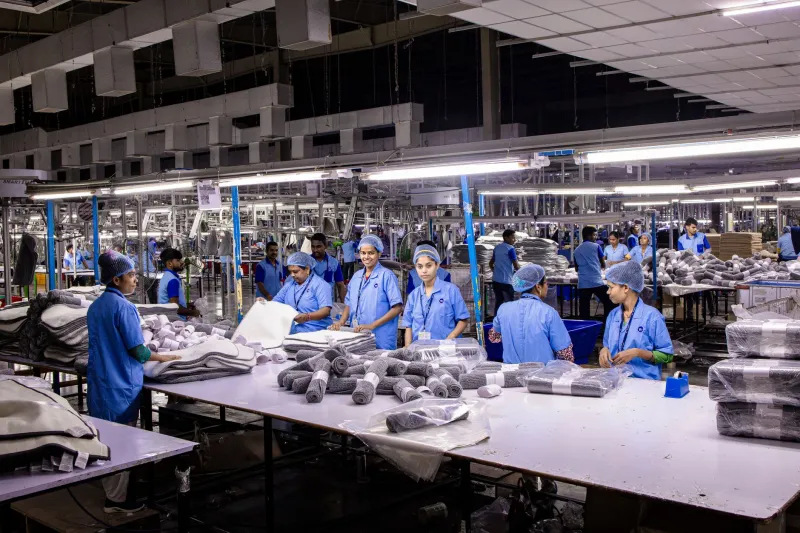
For the better part of three decades, the logic appeared unassailable. Move manufacturing to Vietnam. Establish engineering centers in India. Source components from suppliers clustered across southern China. The cost differentials were real, the quarterly savings were tangible, and the competitive pressure to act was relentless. American executives who resisted were often told they were being sentimental about geography.
What that logic consistently underweighted was a second-order effect that has now matured into a first-order problem: the countries receiving American investment, technology, and operational expertise have been learning—systematically, deliberately, and in many cases with explicit government coordination. The question facing US corporate strategists today is not whether this knowledge transfer occurred. It is whether the companies that enabled it have any coherent plan for what comes next.
The Mechanics of Inadvertent Transfer
Cost arbitrage operations do not exist in isolation. When an American firm establishes a manufacturing facility or a software development center in an emerging economy, it brings with it far more than capital. It brings process documentation, quality control systems, supplier relationship frameworks, and—critically—the tacit knowledge embedded in the managers and technical specialists it dispatches to run the operation.
Local engineers hired to staff these facilities receive training that would otherwise take careers to accumulate. Local suppliers brought into the production ecosystem learn to meet international quality standards they would not have encountered organically. Local logistics partners develop capabilities calibrated to global commercial requirements. The American firm pays for all of this, typically without recognizing it as an investment in the surrounding economy's long-term competitive capacity.
This is not a theoretical concern. The consumer electronics supply chain that American and Taiwanese firms built in China between the 1990s and 2010s has produced a generation of Chinese manufacturers—Xiaomi, Oppo, BYD's battery division, and dozens of less visible component producers—that now compete aggressively in markets their American predecessors once considered proprietary. The pattern has repeated itself in industrial equipment, pharmaceuticals, and increasingly in software services.
Government Amplification
What distinguishes the current competitive threat from previous cycles of industrial catch-up is the degree to which emerging market governments have institutionalized the process. Foreign direct investment is no longer simply welcomed in many of these economies—it is strategically channeled, monitored, and mined for transferable value.
China's Made in China 2025 initiative is the most frequently cited example, but the underlying dynamic is visible across a broader set of markets. India's Production-Linked Incentive scheme, Indonesia's domestic content requirements for mining and energy projects, and Vietnam's evolving technology transfer expectations for foreign investors all reflect the same strategic instinct: use foreign capital and expertise as an accelerant for domestic industrial development, then progressively reduce dependence on the foreign partner once local capability is established.
American companies entering these markets often negotiate for favorable terms on labor costs or tax treatment without fully accounting for the regulatory architecture designed to extract value from the relationship over time. The cost savings realized in years one through five may be partially or entirely offset by the competitive consequences that materialize in years ten through twenty.
Case Architecture: Where the Pattern Has Already Played Out
The semiconductor packaging and testing industry offers a particularly instructive case. American chip designers, seeking to reduce manufacturing overhead, outsourced assembly and testing operations to facilities in Malaysia and Taiwan beginning in the 1980s. Those facilities developed engineering depth, process sophistication, and capital equipment expertise that eventually supported the emergence of independent foundry businesses. The offshore cost-reduction strategy did not merely save money—it built the operational foundation for an industry that now holds considerable leverage over American chip supply chains.
A parallel dynamic is visible in the pharmaceutical sector. American and European drug manufacturers established active pharmaceutical ingredient production in India during the 1990s and 2000s, attracted by dramatically lower synthesis costs. Indian producers absorbed process chemistry knowledge, regulatory navigation expertise, and quality management systems. Several of those producers—Sun Pharmaceutical, Dr. Reddy's Laboratories, Cipla—subsequently entered Western generic markets directly, competing against the very companies whose operational frameworks had shaped their development.
In software, the Indian IT services sector represents perhaps the most complete version of this cycle. What began as a cost arbitrage play for American technology firms has produced a set of global competitors—Infosys, Wipro, HCL Technologies—that now compete for the same enterprise contracts as the American firms that originally seeded the ecosystem.
The Structural Disadvantage That Follows
The competitive challenge posed by these emergent rivals is not symmetrical. Local firms operating in emerging economies frequently retain cost structures that American companies cannot replicate, even when the Americans attempt to maintain their own local presence. Government subsidies, preferential financing from state-backed lenders, and reduced regulatory compliance burdens create a structural floor that is difficult for foreign competitors to undercut.
When these firms move beyond their home markets—as Chinese telecommunications equipment manufacturers, Indian pharmaceutical companies, and Southeast Asian e-commerce platforms have all done—they arrive in third-country markets carrying both the technical sophistication absorbed from American partners and the cost advantages that American regulatory and financial environments do not permit domestically. The American incumbent faces a competitor it inadvertently trained, partially financed, and cannot cost-match.
Rethinking the Calculus Before the Next Cycle Begins
None of this argues that international operations are strategically indefensible. Global market access, proximity to high-growth consumer bases, and genuine operational efficiencies remain legitimate strategic rationales for emerging market engagement. The problem is not the engagement itself—it is the analytical framework through which American companies have historically evaluated it.
Cost savings, measured in basis points against a quarterly benchmark, have dominated the decision architecture. Competitive externalities—the long-run market development consequences of the knowledge and capability being transferred—have rarely received equivalent analytical rigor.
Sophisticated companies are beginning to draw distinctions between operations that generate durable competitive advantage and those that primarily serve as incubators for future rivals. This means more disciplined evaluation of what proprietary knowledge is genuinely being protected versus what is effectively being licensed through operational proximity. It means closer attention to the regulatory trajectory of host countries, and honest assessment of whether a market's attractiveness in year three will still hold in year fifteen once local competitors have matured.
It also means treating the strategic intelligence function as a continuous operational input rather than a pre-entry due diligence exercise. Markets evolve. Competitive landscapes shift. The firms that will navigate this environment most effectively are those that monitor the competitive consequences of their own global footprint with the same rigor they apply to tracking external threats.
The arbitrage window that drove three decades of emerging market strategy is closing—not because labor costs have fully converged, but because the full cost of the strategy, properly accounted for, is considerably higher than the line items that appeared in the original business case. Recognizing that reality is the first step toward building a global strategy that does not inadvertently finance its own obsolescence.