Domestic Doesn't Mean Secure: The Hidden Vulnerabilities Reshoring Leaves Behind
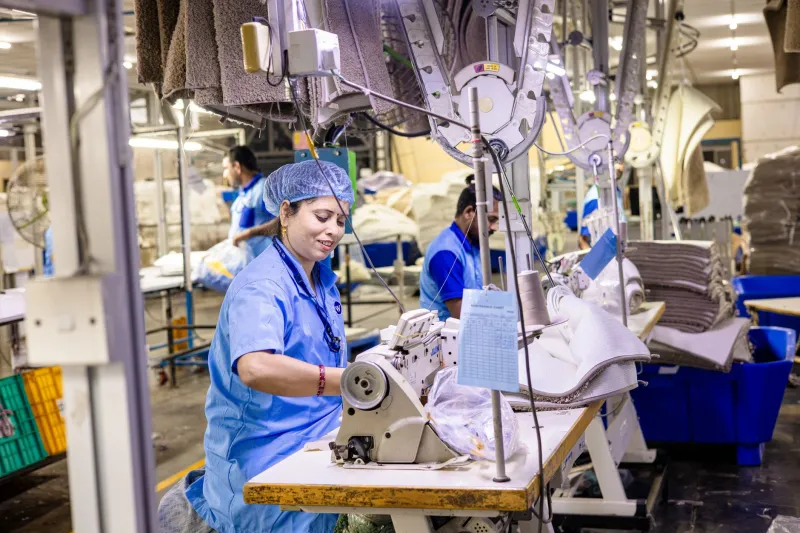
The narrative has been compelling, almost irresistible. After decades of offshoring, American manufacturers are bringing production home. Driven by pandemic-era supply chain shocks, escalating geopolitical tensions with China, and a bipartisan political appetite for industrial revival, reshoring has become the dominant strategic reflex for corporate boards navigating an increasingly fragmented global economy. Billions of dollars in capital expenditure have followed.
Yet the premise underlying much of this investment — that domestic operations are inherently more secure, more controllable, and less exposed to adversarial interference — deserves far more rigorous scrutiny than it typically receives. Proximity to home markets does not neutralize risk. In many cases, it simply relocates it, and occasionally amplifies it in ways that catch even sophisticated organizations off guard.
The Supplier Network Illusion
One of the most persistent misconceptions about reshoring is that it severs dependency on opaque foreign supply chains. In practice, it frequently replaces one set of unknowns with another. Domestic supplier ecosystems, particularly in sectors that were hollowed out during decades of offshoring, are often shallow, fragmented, and inadequately vetted.
When a manufacturer relocates final assembly to the United States but sources components from a network of small and mid-sized domestic suppliers, the intelligence picture does not automatically clarify. Many of these firms have their own international dependencies — raw material contracts, tooling relationships, software licensing arrangements — that extend well into jurisdictions of strategic concern. A Tier 2 or Tier 3 supplier operating out of a facility in the Midwest may be majority-owned by a foreign holding company, serviced by foreign-developed industrial software, or reliant on specialized inputs sourced exclusively from state-controlled enterprises abroad.
The counterintelligence implications of this structure are significant. American companies that conducted rigorous due diligence on overseas partners often apply far less scrutiny to domestic vendors, operating under the assumption that a US address confers a baseline of trustworthiness. That assumption is increasingly exploited.
Workforce Vetting in a Compressed Labor Market
Reshoring at scale requires labor, and the American manufacturing workforce has not been sitting idle waiting for its return. Decades of deindustrialization left significant gaps in both skilled trades and technical disciplines. Companies racing to staff newly domestic operations are competing in a tight labor market, frequently compressing hiring timelines and relaxing vetting standards in ways that create genuine security exposure.
This problem is most acute in sectors with defense, dual-use, or critical infrastructure implications — precisely the industries most aggressively targeted by reshoring policy incentives. The CHIPS and Science Act, the Inflation Reduction Act, and related federal programs are channeling investment into semiconductor fabrication, battery manufacturing, and advanced materials production. These are also sectors with well-documented histories of foreign intelligence targeting.
Workforce infiltration does not require elaborate espionage. It can be as straightforward as a foreign national with undisclosed affiliations securing employment in a sensitive role, or a domestic employee with financial vulnerabilities being cultivated by a foreign handler. Companies that invested in robust counterintelligence protocols for overseas operations sometimes enter domestic manufacturing environments with no equivalent framework, operating under the mistaken belief that federal oversight of the broader sector provides adequate protection. It does not.
The Raw Material Trap
Perhaps the most structurally underappreciated dimension of reshoring vulnerability lies not in manufacturing operations themselves but in the upstream resource dependencies that no amount of domestic investment can easily dissolve. The United States lacks domestic production capacity for a significant share of the critical minerals and rare earth elements required by the industries reshoring is meant to revitalize.
Lithium, cobalt, nickel, and the seventeen elements classified as rare earths are not evenly distributed across friendly geographies. China controls processing capacity for a substantial majority of the rare earths that flow into electric vehicles, advanced electronics, and defense systems. The Democratic Republic of Congo remains the dominant source of cobalt. Reshoring a battery gigafactory to Nevada does not eliminate exposure to these upstream chokepoints — it simply relocates the final stage of a supply chain whose most strategically sensitive nodes remain firmly outside American control.
This creates a form of geopolitical leverage that adversarial states understand with considerable sophistication. A domestic manufacturing operation that depends on foreign-controlled raw materials is not insulated from geopolitical pressure — it is merely one step removed from it. And that single step can generate a false confidence that proves far more dangerous than the transparent dependencies it replaced.
Regulatory Complexity Has Not Retreated
Companies that relocated operations partly to escape the compliance burden of operating across multiple foreign jurisdictions are discovering that domestic manufacturing carries its own regulatory complexity, and that complexity is intensifying. Environmental permitting, Buy American provisions, export control classifications, and evolving Committee on Foreign Investment in the United States (CFIUS) scrutiny of domestic facilities all represent material compliance obligations that require dedicated legal and operational attention.
More consequentially, the regulatory perimeter around sensitive domestic industries is expanding. Federal agencies are increasingly scrutinizing foreign investment in companies operating near military installations, critical infrastructure, or advanced technology clusters — even when those companies are nominally domestic. A reshored facility that accepts foreign capital, licenses foreign technology, or hires foreign nationals in technical roles may find itself subject to CFIUS review processes that its leadership did not anticipate and for which it was not prepared.
The compliance architecture required to operate responsibly in this environment is not simpler than what multinational operations demanded. It is different, and in certain respects more demanding, because the consequences of noncompliance carry direct national security implications rather than merely commercial or reputational ones.
Designing for Genuine Resilience
None of this argues against reshoring as a strategic direction. There are legitimate and compelling reasons to reduce certain categories of foreign dependency, and the policy environment strongly favors domestic investment in key sectors. The argument, rather, is against the complacency that treats reshoring as the conclusion of a risk management process rather than the beginning of a new one.
Organizations that approach domestic manufacturing with the same intelligence discipline they applied to their most sensitive overseas operations will be better positioned to capture the strategic benefits reshoring offers without inheriting a new generation of vulnerabilities. That means conducting genuine supplier due diligence that does not stop at a domestic mailing address. It means applying workforce security protocols proportionate to the sensitivity of the work being performed. It means mapping raw material dependencies with the same rigor applied to finished goods supply chains.
And it means resisting the powerful organizational temptation to declare victory once the production line is on American soil. In a world where adversarial actors have demonstrated consistent creativity in identifying and exploiting structural gaps in corporate security posture, the geography of a manufacturing facility is the beginning of a risk assessment, not its end.
The companies that will derive lasting strategic advantage from the reshoring wave are not those that moved fastest, but those that moved most deliberately — treating domestic operations as a strategic asset worth protecting rather than a safe harbor that requires no further thought.