Legal Warfare: How Foreign Governments Are Using Intellectual Property Frameworks to Strip American Companies of Their Most Valuable Assets
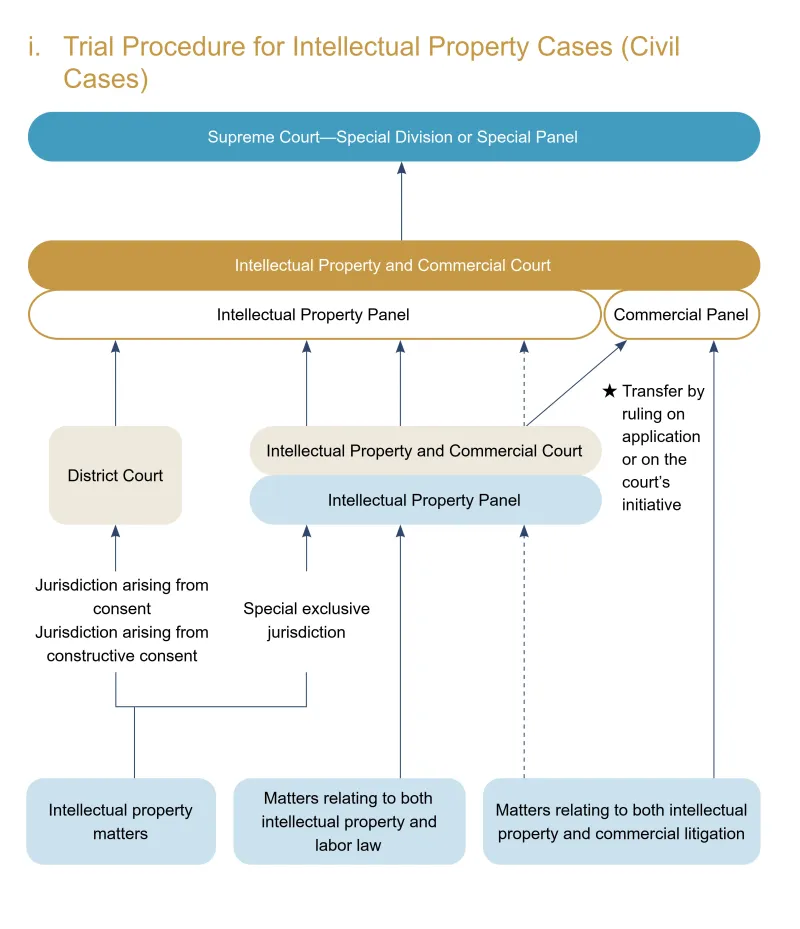
Photo: intellectual property legal documents courtroom international business, via www.judicial.gov.tw
The Battlefield Has Moved Into the Courtroom
For decades, American corporations understood geopolitical risk in largely conventional terms: currency volatility, political instability, labor disruptions, and the occasional expropriation. What few anticipated was the emergence of a far more sophisticated threat — one dressed in the language of the rule of law and prosecuted through the machinery of intellectual property courts.
State-backed competitors in several major markets have learned that the most efficient path to competitive parity is not organic innovation. It is legal extraction. By manipulating patent dispute mechanisms, engineering trade secret allegations, and embedding technology-transfer requirements into regulatory licensing frameworks, foreign governments and their affiliated enterprises have developed a playbook that reliably strips Western firms of their most defensible assets: their proprietary technology, their processes, and their accumulated institutional knowledge.
The consequences for American companies are severe and, in many cases, irreversible.
How the Mechanism Works
The architecture of this strategy is more coordinated than most corporate legal teams recognize. It typically unfolds across three interlocking vectors.
The first is the patent flooding tactic. In several jurisdictions — most notably in markets where domestic patent offices operate under government influence — state-affiliated entities file broad, often derivative patent claims in categories where a foreign competitor has established a presence. The goal is not necessarily to win in court. The goal is to create sufficient legal uncertainty that the American firm must either settle, license its technology at below-market rates, or exit the market entirely. In either scenario, proprietary knowledge is transferred or neutralized.
The second vector involves trade secret litigation as a regulatory weapon. In multiple documented cases across the semiconductor, pharmaceutical, and advanced manufacturing sectors, employees of American firms operating abroad have faced criminal allegations of trade secret misappropriation — allegations timed, notably, to coincide with contract renegotiations or market entry bids by state-backed competitors. The legal proceedings themselves become leverage, regardless of merit.
The third and perhaps most structurally embedded mechanism is the regulatory licensing requirement. Several governments have conditioned market access on the disclosure of source code, manufacturing processes, or algorithm specifications to local regulatory bodies. These bodies, in turn, maintain relationships with domestic industry players that are difficult to characterize as arm's-length. American executives who complied with these requirements believing them to be routine regulatory formalities later discovered their technology mirrored in products launched by government-affiliated enterprises.
Case Patterns Worth Examining
While specific litigation remains subject to confidentiality agreements and ongoing proceedings, the patterns across industries are consistent enough to constitute a recognizable threat profile.
In the clean energy sector, multiple American firms that entered joint venture arrangements in Asia as part of government-mandated market access structures subsequently found their core turbine and battery storage designs replicated by local partners who later became direct competitors in third-country markets — including, in several instances, the United States itself. The joint venture agreements, reviewed in retrospect, contained IP audit provisions that effectively granted local partners visibility into core technical specifications.
In the pharmaceutical space, regulatory submissions requiring full disclosure of active ingredient synthesis processes have preceded the launch of near-identical generic formulations by state-affiliated manufacturers in timelines that would have been impossible without access to the original submission data.
These are not coincidences. They are outcomes of a deliberate strategic framework.
What Executives Consistently Underestimate
The central failure mode among American companies confronting these threats is a tendency to process them as isolated legal events rather than as components of a coordinated competitive strategy. Corporate legal teams evaluate patent disputes on their individual merits. Regulatory compliance teams treat licensing requirements as administrative obligations. Neither function has visibility into the broader strategic picture.
This organizational fragmentation is itself a vulnerability. State-backed actors operating with long time horizons and coordinated government support are, by definition, executing strategies that span legal, regulatory, and commercial domains simultaneously. Responding to each vector in isolation is the organizational equivalent of treating symptoms while ignoring the underlying condition.
A second underestimated dimension is timing. The window for effective defensive action is almost always earlier than executives assume. By the time a patent dispute reaches formal proceedings or a trade secret allegation becomes public, the leverage position has already shifted. The technology has often already been accessed. The competitive damage is largely done.
A Defensive Architecture for the Current Environment
Organizations that have navigated these environments most effectively share several structural characteristics that their more exposed counterparts lack.
Pre-entry IP compartmentalization is perhaps the most critical. Before establishing any operational presence in a high-risk jurisdiction, the most sensitive intellectual property — core algorithms, proprietary synthesis processes, foundational engineering specifications — should be legally and operationally separated from the entity that will operate in that market. What cannot be accessed through regulatory disclosure or litigation cannot be extracted through those mechanisms.
Regulatory engagement mapping is equally important. Companies should conduct structured assessments of every regulatory body with which they will interact in a given market, including the institutional relationships those bodies maintain with domestic industry players. This is not a legal exercise. It is a competitive intelligence exercise, and it requires different expertise.
Litigation scenario planning — not merely reactive legal preparedness, but proactive modeling of how a state-backed competitor might deploy legal mechanisms against the company — should be integrated into market entry strategy. The question is not whether the company has strong legal defenses. The question is what a sophisticated adversary with a three-year horizon and government backing might do, and whether the company's current IP architecture creates exploitable surface area.
Finally, executive-level intelligence integration is non-negotiable. The legal, regulatory, and competitive intelligence functions that currently operate in silos must be connected at the senior leadership level. The companies that have sustained competitive positions in high-risk markets are invariably those where the CEO and board receive integrated threat assessments — not departmental status reports.
The Strategic Imperative
Intellectual property has always been a competitive asset. What has changed is that it has become a target of state-level strategic action in a growing number of markets. The legal frameworks designed to protect innovation are being systematically repurposed to enable its transfer.
American companies that continue to treat this as a legal department problem will continue to lose ground. Those that reframe it as a core dimension of international competitive strategy — and invest accordingly — will be positioned to compete on terms they actually control.