Proximity Is Not a Strategy: The Operational Reckoning Facing American Manufacturers Who Bet on Nearshoring
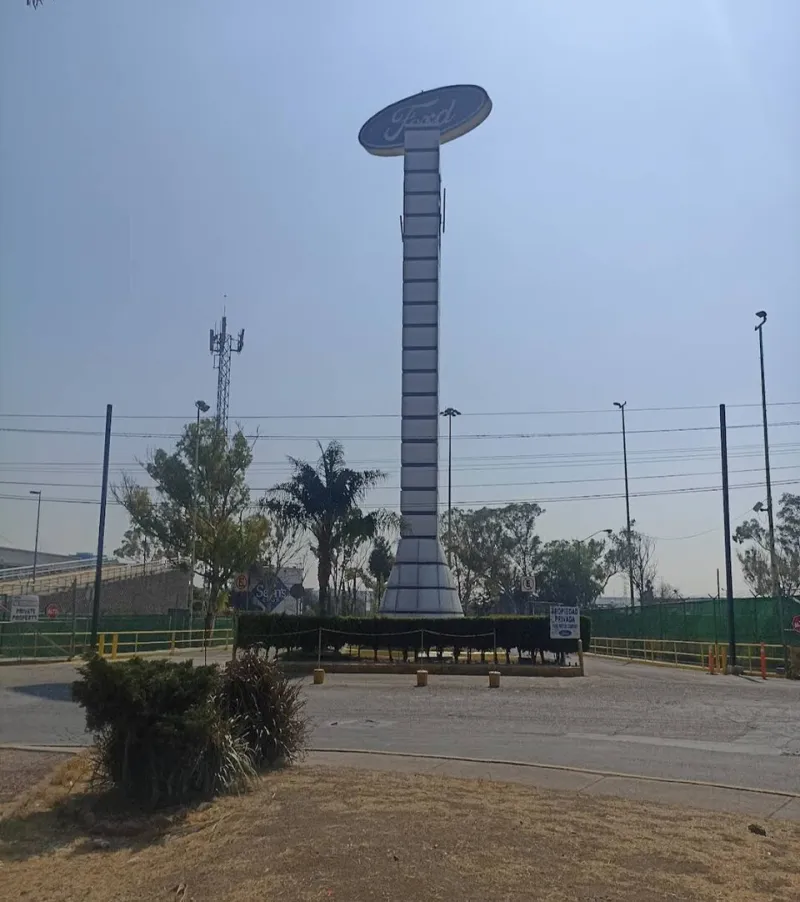
Photo: Ivonnecadena50, CC BY-SA 4.0, via Wikimedia Commons
For much of the past decade, the strategic logic behind nearshoring felt nearly self-evident. Move production closer to the American consumer, reduce dependence on trans-Pacific shipping lanes, and sidestep the geopolitical friction accumulating between Washington and Beijing. The pitch was compelling in boardrooms from Detroit to Dallas, and capital followed accordingly. Between 2020 and 2024, foreign direct investment into Mexico alone surged to levels not seen in a generation, with American industrial firms leading the charge.
What those projections did not fully account for was this: distance is a logistics variable, not an operational solution. As the first wave of nearshored facilities reaches full production, a more complicated picture is emerging — one defined not by the risks companies escaped, but by the ones they failed to anticipate.
The Regulatory Patchwork Nobody Mapped
One of the most persistent misconceptions about nearshoring is that operating in the Western Hemisphere means operating within a coherent regulatory framework. It does not. Mexico alone presents manufacturers with overlapping federal, state, and municipal compliance requirements that frequently contradict one another. Environmental permitting processes in Nuevo León differ substantially from those in Jalisco. Labor law enforcement varies not just by state but by the political tenure of local labor boards — bodies whose composition can shift following municipal elections that most American executives have never monitored.
Central American destinations introduce additional complexity. Guatemala, Honduras, and El Salvador each maintain distinct customs regimes, even as they participate in broader regional trade agreements. A manufacturer operating assembly facilities across two of these countries may find that components crossing a shared border trigger tariff classifications that were not anticipated during the initial cost modeling phase. These are not edge cases. They are the operational baseline.
The practical consequence is that legal and compliance overhead — costs that nearshoring advocates typically minimized — is consuming margin that was supposed to be recovered from reduced freight expenditure. Several mid-sized American manufacturers that Metropole Global has engaged with over the past year report that regulatory navigation in their nearshore facilities now requires dedicated in-country legal counsel at a scale they did not budget for during the transition planning phase.
Infrastructure That Was Never Built for This Volume
Mexico's northern industrial corridor — the so-called "nearshoring corridor" stretching from Monterrey through Ciudad Juárez — was not designed to absorb the volume of industrial activity now being directed toward it. Power grid reliability has become a material operational concern. Water scarcity, particularly in the arid northern states, is beginning to constrain manufacturing processes that depend on consistent supply. Road and rail infrastructure connecting interior production zones to border crossings is under measurable strain, contributing to transit delays that erode the time-to-market advantages nearshoring was supposed to deliver.
The border crossing infrastructure itself deserves particular attention. The ports of entry at Laredo, El Paso, and San Diego — which collectively handle the majority of US-Mexico trade flows — were not meaningfully expanded in anticipation of the nearshoring wave. Crossing wait times have increased. Customs processing backlogs have grown. For manufacturers operating on just-in-time production models, these delays are not inconvenient. They are structurally disruptive.
Caribbean Basin destinations present a different but equally significant infrastructure challenge. Port capacity in several island nations remains limited, and intermodal connectivity — the ability to move goods seamlessly from factory floor to ocean freight to US distribution center — is inconsistent at best. Companies that entered these markets attracted by favorable labor costs are discovering that logistics premiums can neutralize those savings within a single fiscal quarter.
Labor Markets That Defied the Models
The labor cost argument for nearshoring was always somewhat more nuanced than its advocates acknowledged. Wage rates in northern Mexico, in particular, have risen considerably over the past five years, driven by competitive demand from the very wave of investment the nearshoring trend produced. In some manufacturing sectors, the wage differential between Mexican production facilities and American ones has narrowed to a point where the original cost justification requires reexamination.
Beyond wages, turnover rates in nearshore manufacturing zones are presenting a genuine operational challenge. Annual attrition in some facilities exceeds forty percent, creating a persistent training burden and introducing quality consistency problems that are difficult to manage from a distance. American operations managers accustomed to more stable domestic labor markets have found the adjustment demanding, and the cultural and linguistic dimensions of workforce management across borders add layers of complexity that are rarely captured in pre-investment feasibility studies.
Labor relations in Mexico have also shifted following legislative reforms that strengthened union rights and introduced new collective bargaining requirements. These reforms, broadly positive for Mexican workers, have nonetheless introduced negotiation dynamics that American manufacturers were unprepared to navigate. Several firms have experienced work stoppages that had no precedent in their domestic operational histories.
Rethinking What Resilience Actually Requires
None of this is an argument against nearshoring. Geographic diversification of production capacity remains a strategically sound objective, and dependence on single-region manufacturing — particularly in regions subject to accelerating geopolitical pressure — carries risks that any responsible executive must account for. The error was not in moving production. The error was in treating movement as equivalent to strategy.
Building genuine supply chain resilience in nearshore environments requires a more granular investment in operational intelligence than most American manufacturers have historically maintained. It requires country-specific regulatory expertise, not generalized regional knowledge. It requires infrastructure assessment that goes beyond what a site visit and a consultant's report can reveal. It requires labor market monitoring that tracks not just wage rates but workforce sentiment, union organizing activity, and local political dynamics that shape enforcement priorities.
It also requires accepting that nearshoring, like any significant operational transition, carries a maturation timeline. The companies that entered these markets with realistic implementation horizons and adequate on-the-ground resources are managing the challenges. Those that treated nearshoring as a rapid fix to supply chain exposure are learning, at measurable cost, that operational complexity does not respect geographic boundaries.
The strategic imperative now is not to reverse course, but to build the institutional knowledge and local presence that transform proximity from a logistical advantage into a durable competitive one. That work is harder than drawing a new line on a sourcing map. It is also the only version of nearshoring that will hold.